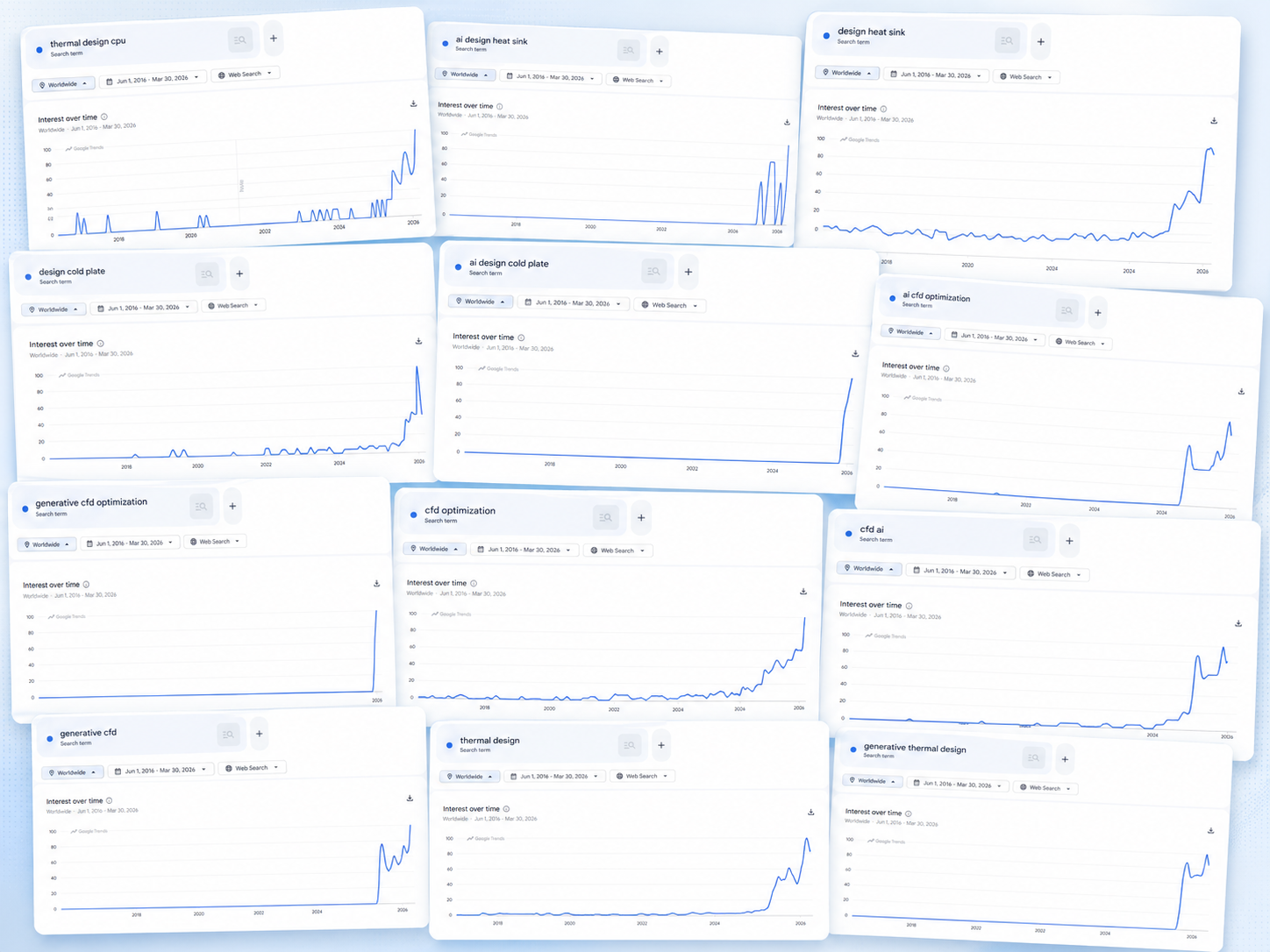
Thermal design has always been an important part of engineering, but recent Google Trends data raises an interesting question:
Are more people starting to look at thermal design through the lens of AI, optimization, and generative design?
Google Trends does not tell us exactly who is searching, what their intent is, or whether search interest is turning into adoption. It shows relative interest over time. So this data is best viewed as a signal rather than a conclusion.
Still, the signal is worth exploring. When several related terms begin moving at the same time, it may suggest that something broader is happening in the industry.
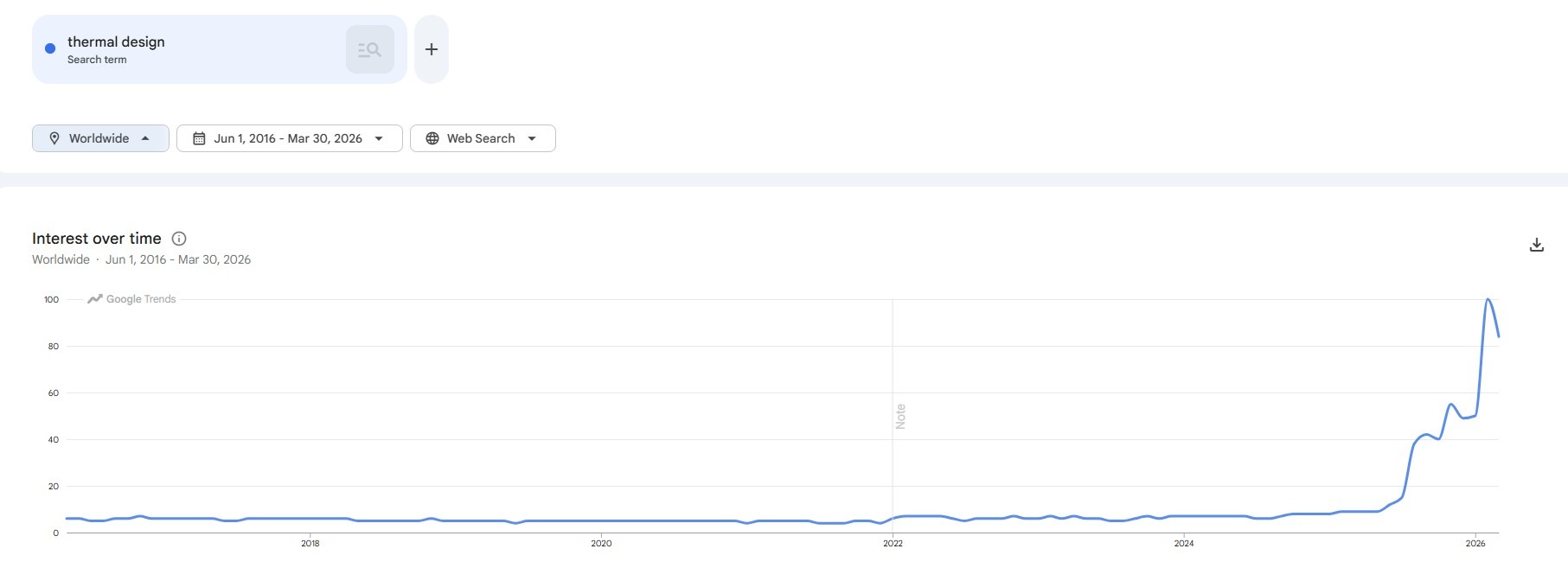
What it may suggest:
- Thermal design is becoming more visible as a product development challenge.
- Higher power densities, compact packaging, electrification, and AI infrastructure may be increasing attention around cooling performance.
- Thermal decisions may be moving earlier into the design process because they affect reliability, efficiency, and time-to-market.
- The rise suggests broader industry interest, not just interest from specialist thermal teams.
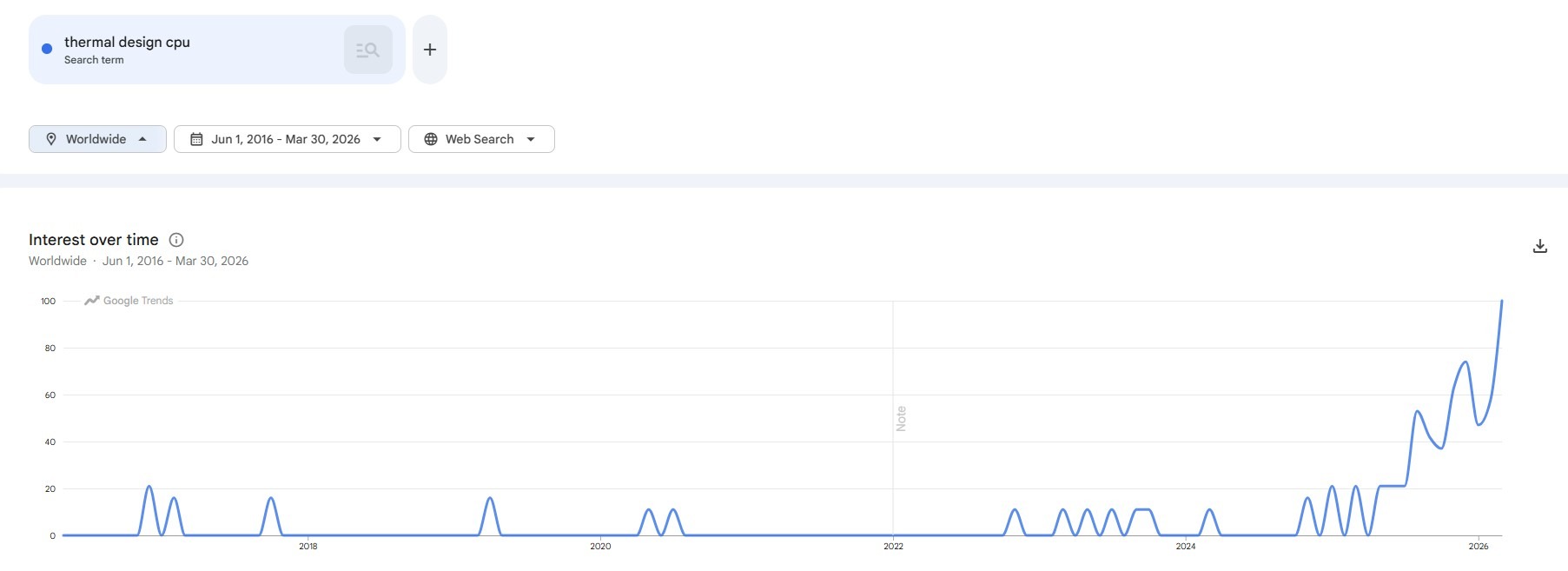
What it may suggest:
- Processor-level cooling is receiving renewed attention.
- AI workloads, CPUs, GPUs, and accelerators may be making thermal performance more critical to compute performance.
- Thermal management may be increasingly seen as a limiting factor for system density, reliability, and performance.
- The interest around CPU thermal design fits into the wider conversation around high-performance computing and AI infrastructure.
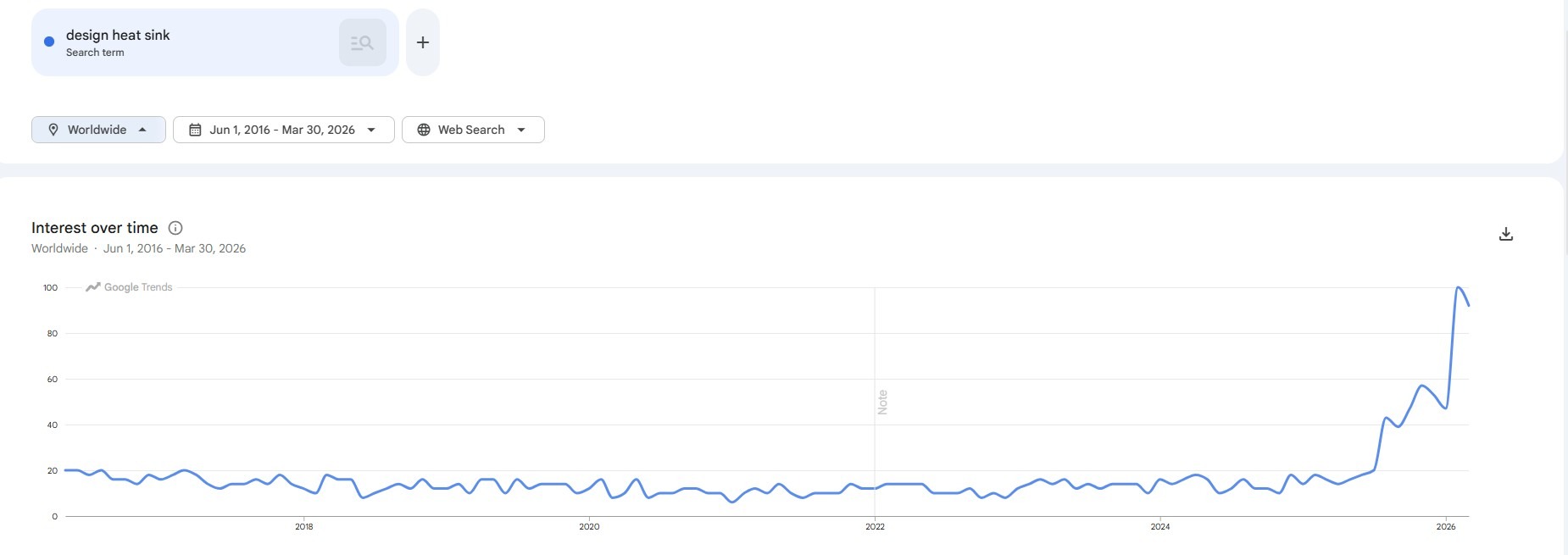
What it may suggest:
- Even established thermal components are attracting renewed design interest.
- Heat sink requirements may be becoming harder to balance across airflow, pressure drop, acoustics, weight, cost, packaging, and manufacturability.
- Engineers may be searching for better approaches to familiar design problems.
- The increased interest could reflect the need for more optimized heat sink designs under tighter product constraints.
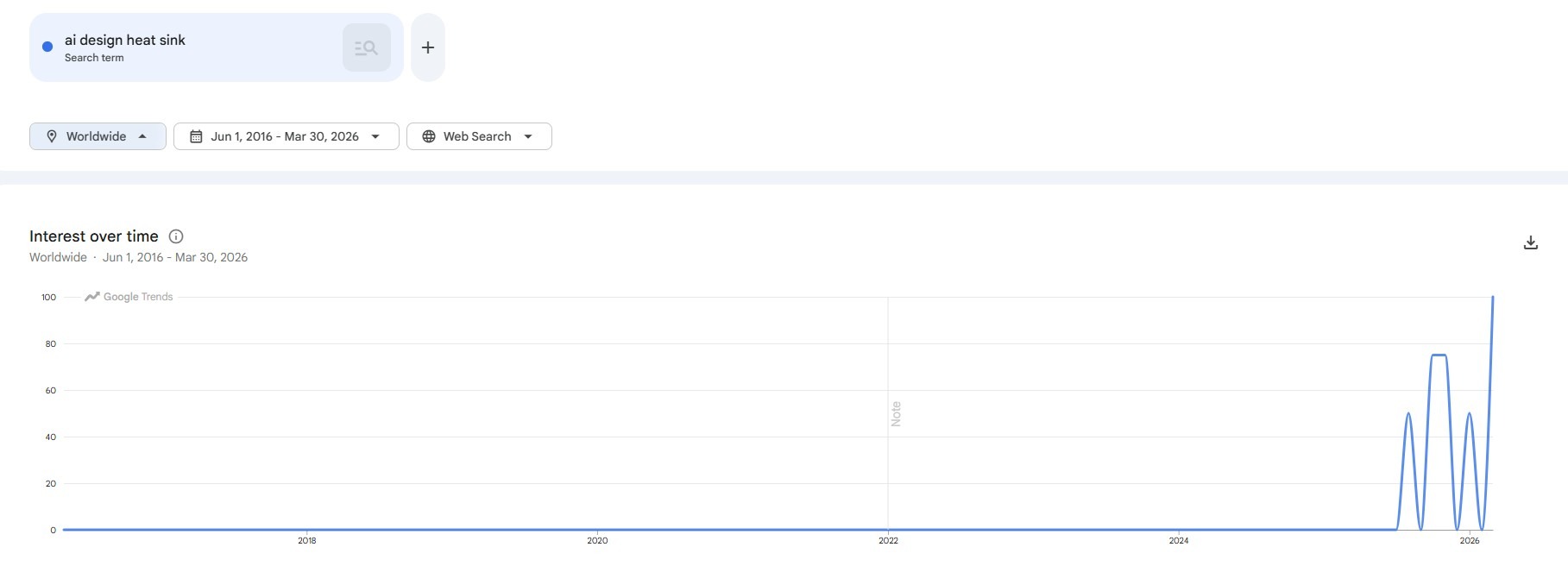
What it may suggest:
- AI is beginning to enter searches around specific thermal components.
- Engineers may be exploring whether AI can support faster concept exploration or optimization.
- The phrase suggests practical curiosity rather than general AI interest alone.
- This may be an early signal that AI-assisted component design is becoming part of the thermal engineering conversation.
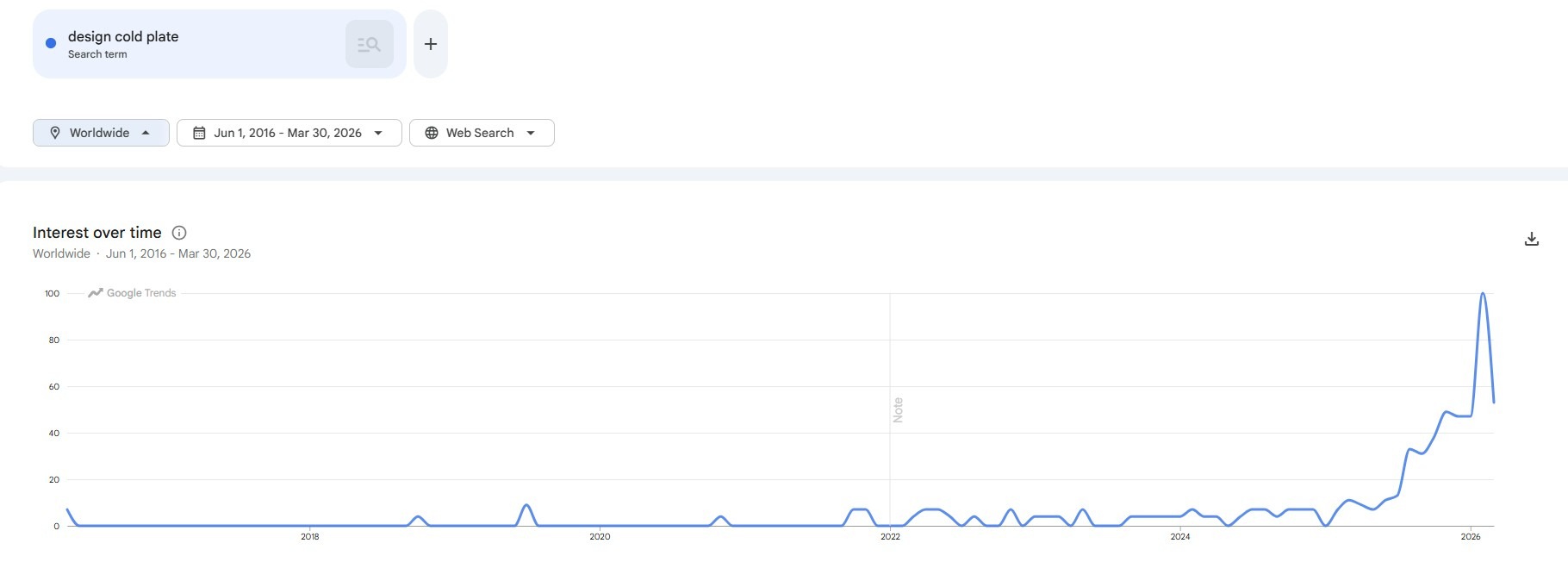
What it may suggest:
- Cold plate design is becoming a more active area of interest.
- Liquid cooling may be gaining attention across batteries, power electronics, GPUs, data centres, and high-performance computing.
- Engineers may be facing more complex cold plate requirements, including temperature uniformity, pressure drop, flow distribution, packaging, and manufacturability.
- The growth may reflect the increasing importance of liquid cooling in high-power applications.
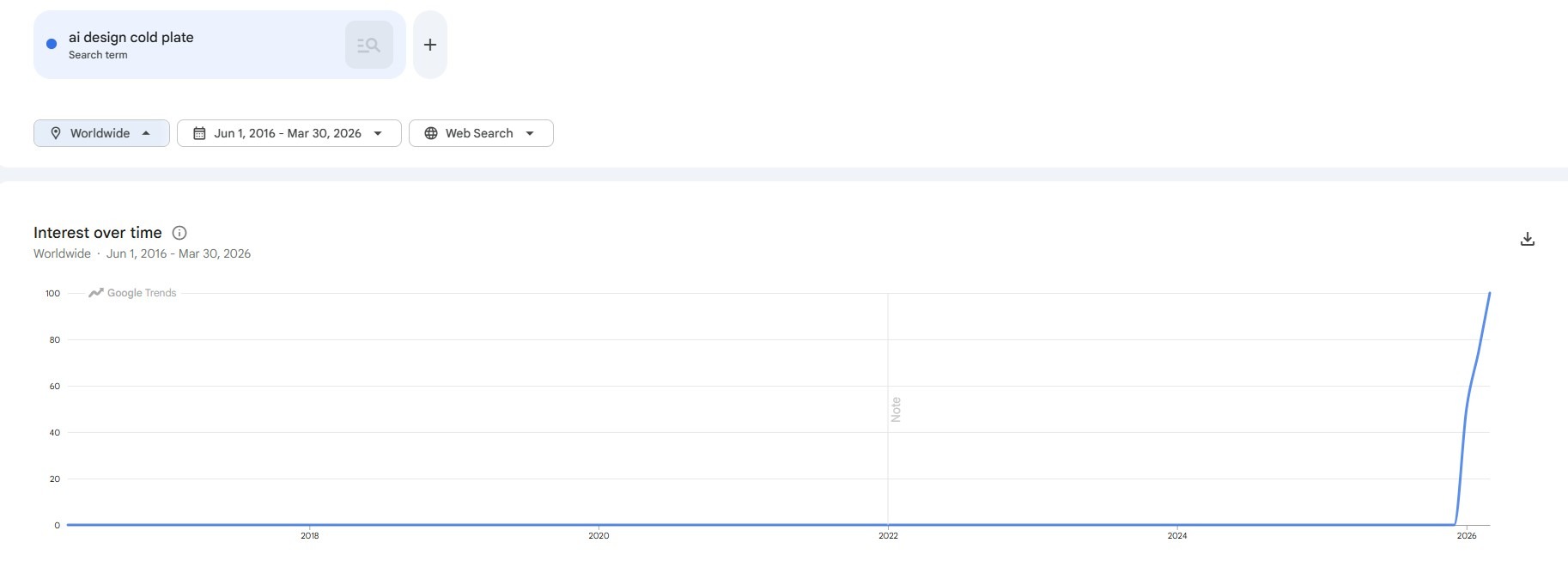
What it may suggest:
- AI and liquid cooling are beginning to appear together in search behaviour.
- Cold plate design may be seen as a strong candidate for AI-assisted or generative design methods because of its many interacting constraints.
- Engineers may be looking for support in exploring complex cooling layouts, flow paths, and pressure drop limits.
- This is likely an early signal, but it points to growing curiosity around AI-supported liquid cooling design.
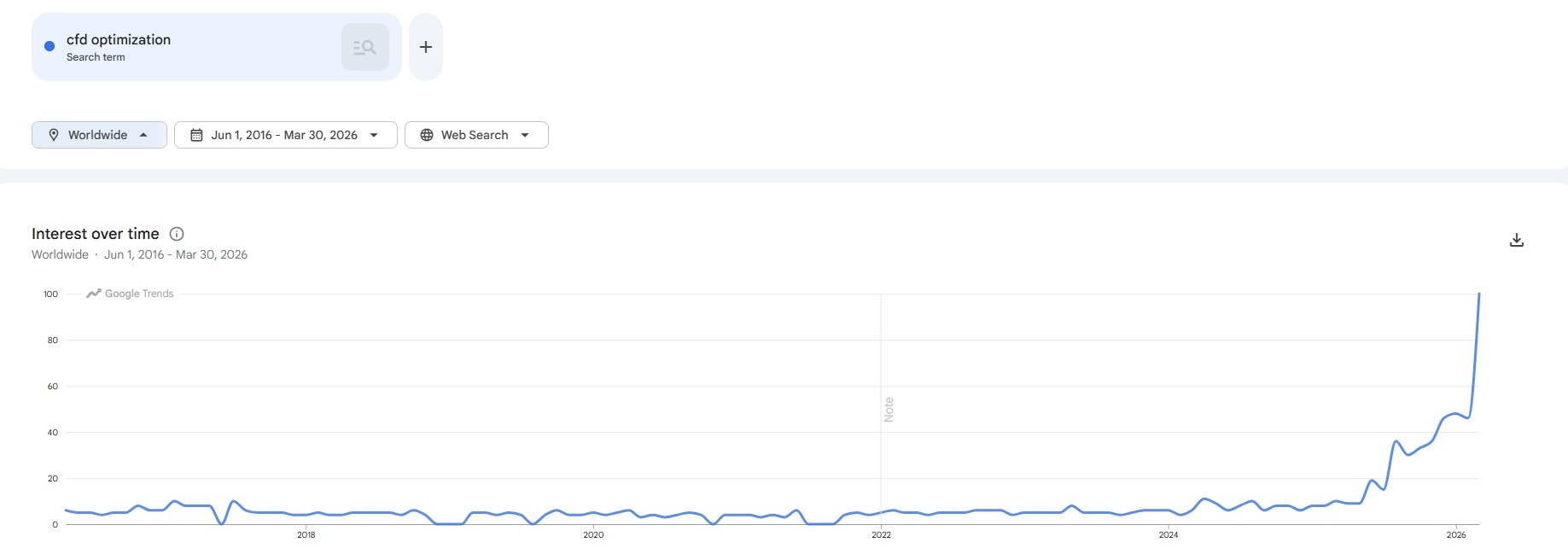
What it may suggest:
- Optimization is becoming more central to simulation-led engineering.
- Teams may be looking for ways to get more value from CFD beyond analysis alone.
- The interest may reflect pressure to reduce manual iteration and improve design performance faster.
- CFD optimization appears to be part of a broader move toward more structured, performance-driven design workflows.
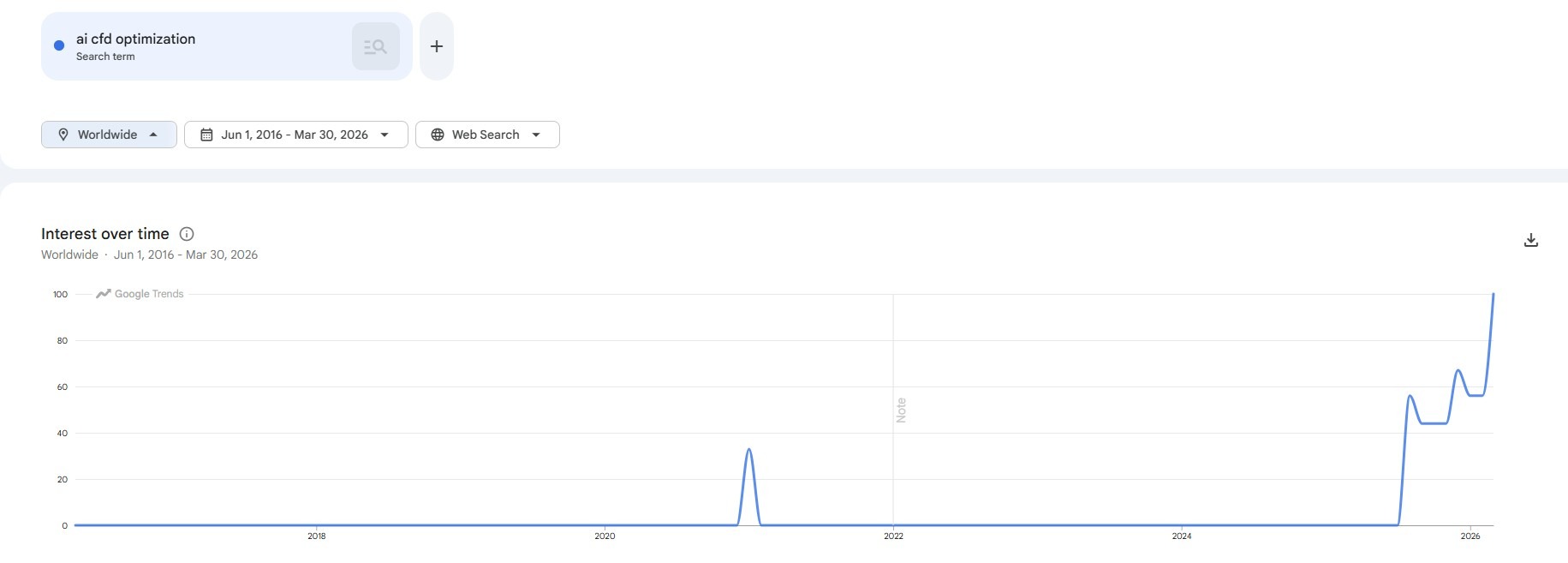
What it may suggest:
- AI is becoming part of the simulation and optimization conversation.
- Engineers may be exploring whether AI can accelerate optimization loops or reduce repetitive CFD iteration.
- The phrase connects AI directly to technical engineering workflows, not only general productivity.
- This may indicate growing interest in smarter, more automated simulation-driven design methods.
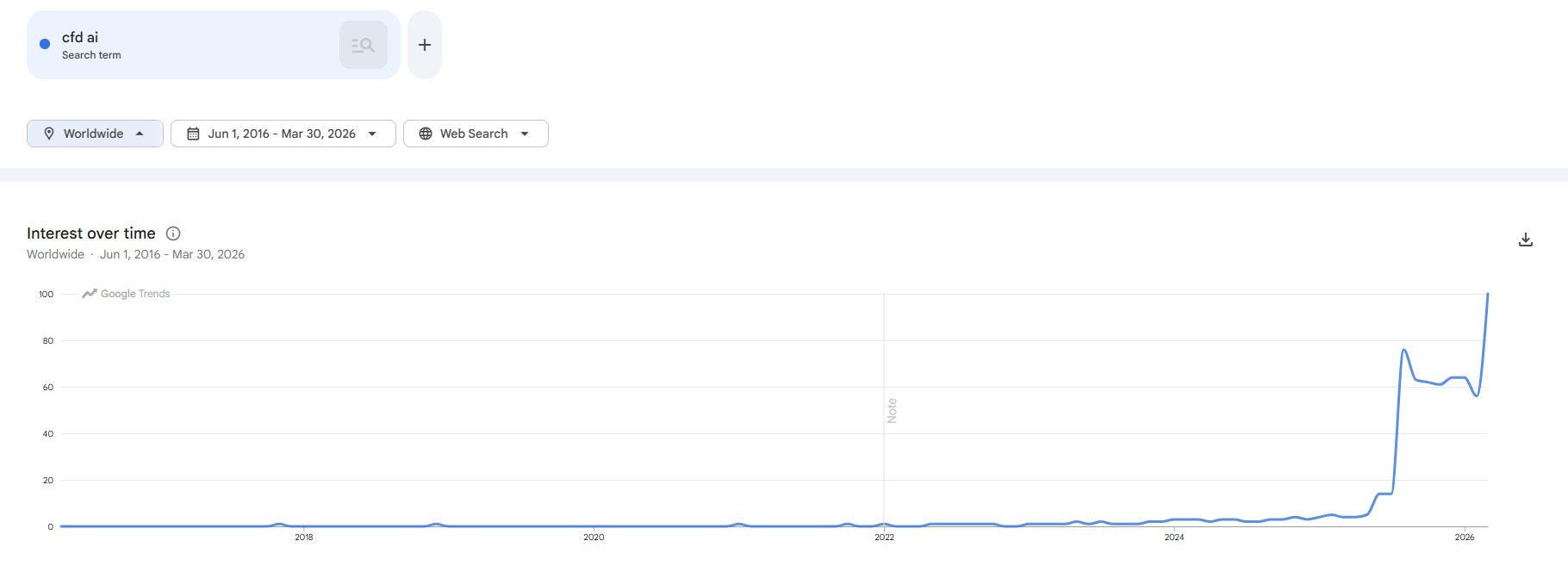
What it may suggest:
- People may be at an early exploration stage around AI and CFD.
- Broad terms like this often appear before users narrow down to specific tools, workflows, or methods.
- Interest may relate to surrogate models, faster simulation, automated design exploration, or workflow acceleration.
- The trend suggests AI is becoming part of how people investigate CFD-related problems.
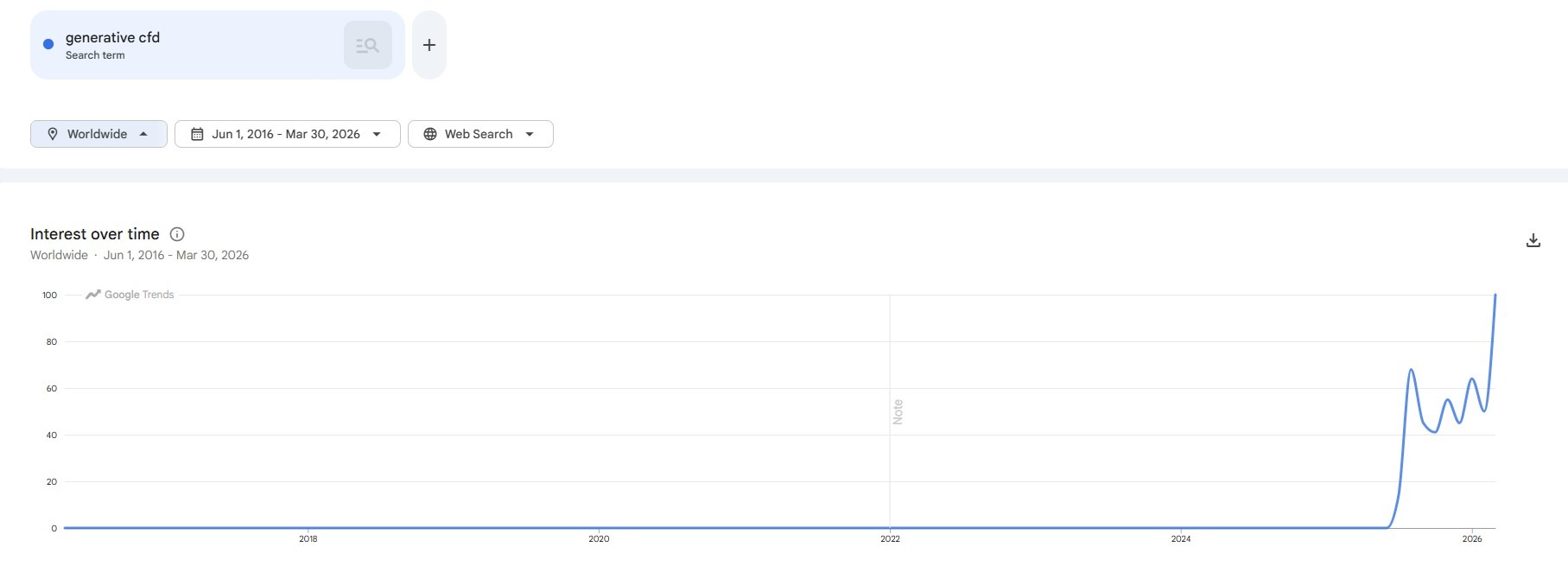
What it may suggest:
- Generative approaches are starting to enter the CFD conversation.
- Engineers may be exploring how simulation can support design discovery earlier in the process.
- The term suggests interest in creating and improving design concepts, not only evaluating them.
- This may point to a growing role for CFD in early-stage design exploration.
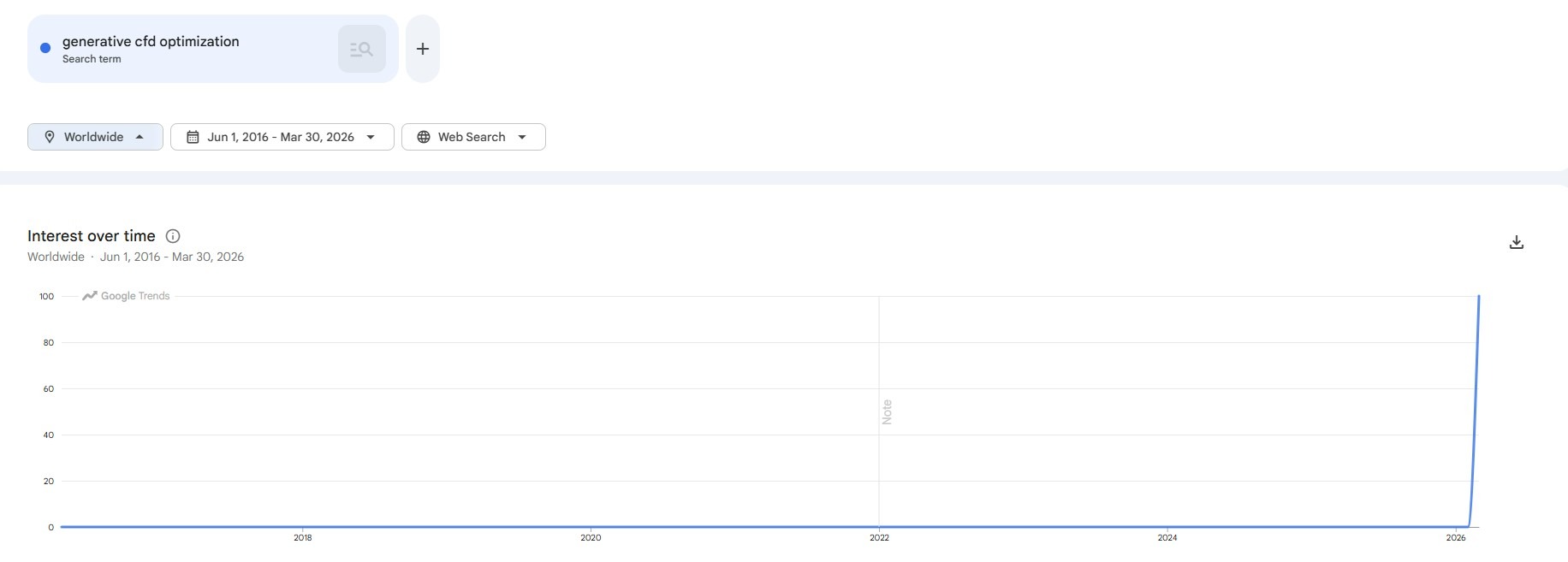
What it may suggest:
- Some users may be looking for more complete simulation-led generative workflows.
- The phrase combines design generation, CFD, and optimization, which points to a more advanced search intent.
- Engineers may be exploring how to discover and improve designs within one connected process.
- Because the term is specific, it may still be niche, but its appearance is meaningful.
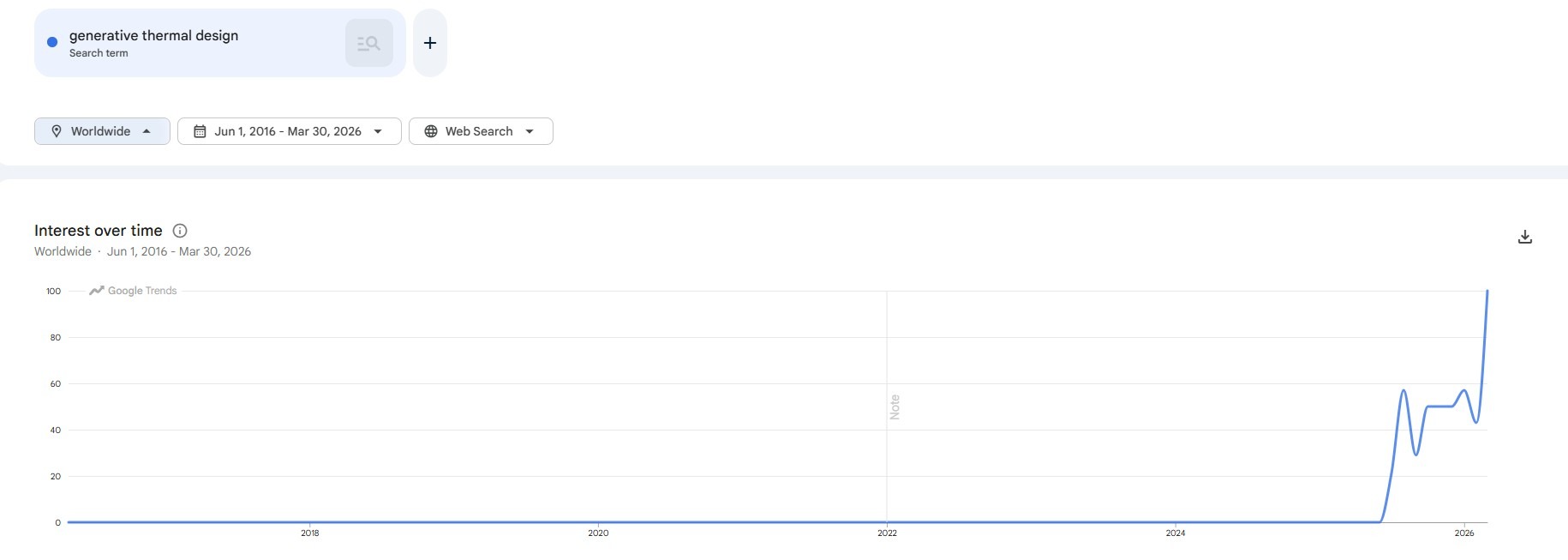
What it may suggest:
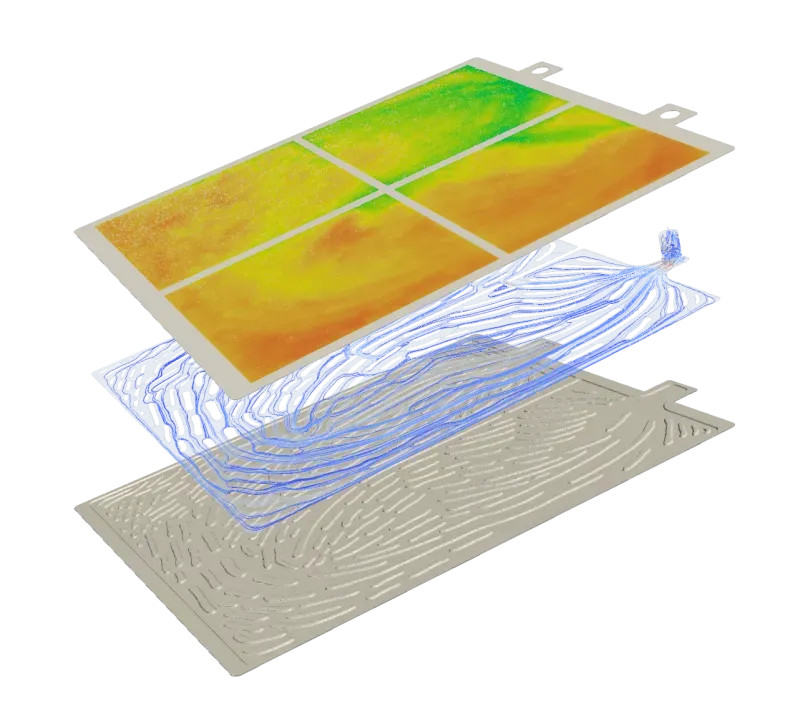
- Generative design is becoming more directly connected to thermal engineering.
- Engineers may be looking for ways to explore better thermal concepts earlier in development.
- The term reflects interest in solving constrained thermal problems involving heat transfer, pressure drop, space, manufacturability, and system integration.
- This may be one of the clearest signals that the language around thermal design is expanding.
What is changing in the industry?
Looking across the data, a few themes stand out:
- Thermal design appears to be receiving more attention as power density, electrification, compact electronics, and AI infrastructure increase cooling demands.
- Component-level searches around heat sinks and cold plates suggest that familiar thermal solutions are facing more complex design requirements.
- CFD optimization searches suggest that engineers may be looking for more structured ways to improve designs through simulation.
- AI-related searches suggest curiosity around faster, smarter, or more automated design workflows.
- Generative design searches suggest growing interest in design discovery, especially for problems with many interacting constraints.
The important point is that these trends appear together. A single search term could be noise, but several related terms becoming more visible in the same period may suggest a wider shift in how the industry is thinking about thermal design.
And by how much?
These trends may be useful as a lead indicator of how thermal design is changing.
As thermal challenges become more demanding, search behaviour appears to be changing with them. Higher heat loads, tighter spaces, electrification, AI infrastructure, shorter development cycles, and more complex manufacturing requirements are all increasing pressure on engineering teams.
In that context, the rise in searches around thermal design, CFD optimization, AI-assisted workflows, and generative design may be an early signal of where the industry is heading.
The most interesting takeaway is not only that people are searching more but that they are also searching differently.
As design engineers’ processes and workflows continue to evolve, the adoption of new technologies becomes only a matter of time. When existing approaches are placed under greater pressure, teams naturally begin looking for methods that help them explore more options, reduce manual iteration, and make better design decisions earlier.
If you’re interested in learning more about generative thermal design, read more news, white papers, case studies and more at www.diabatix.com.

.png)